EN
EN


What Makes a Commercial Bounce House Different From a Home Model
A commercial bouncy slide may look similar to a home inflatable at first glance, but it is built for a very different job. A family might inflate a unit a few times each year for birthdays or holidays. A rental operator, event planner, or distributor needs equipment that can be transported, installed, supervised, cleaned, packed away, and used again across a busy schedule. That difference changes how buyers should evaluate materials, layout, air supply, anchoring, and day-to-day upkeep.
For commercial buyers, the useful question is not simply “Which inflatable is bigger?” It is “Can this unit support the operating conditions, setup process, and maintenance routine of my events?”
Home Use and Commercial Use Start With Different Operating Patterns
When a commercial bouncy slide is part of a paid event or rental booking, the operating team must plan for more than a few hours of play. It needs a repeatable workflow for delivery, placement, inflation, attendance, closing checks, and collection. That is the practical divide between an occasional backyard purchase and commercial equipment.
Home inflatables are generally chosen for occasional, light-duty play in a controlled backyard setting. The owner usually knows the participants, can choose a calm weather window, and has time to dry and store the unit after use. A commercial bouncy slide, by contrast, is commonly evaluated for repeated deployment. Rental companies and event teams may move it between sites, welcome different groups of users, and work within fixed event timelines.
This does not mean every commercial unit is appropriate for every venue. Capacity guidance, age separation, supervision, weather limits, local rules, and the manufacturer’s instructions still matter. It does mean that commercial purchasing should include the full operating cycle rather than only the moment children are jumping.
Material and Construction Matter More When Use Is Repeated
For a commercial bouncy slide, a buyer should assess the construction in the places that are touched, folded, moved, and inspected most often. This approach is more useful than relying on a broad “commercial grade” label in isolation.
Commercial listings often call attention to heavy-duty vinyl, reinforced high-wear areas, seams, attachment points, and practical access for inspection. These details are relevant because entrances, slide landings, climbing lanes, and anchor areas receive repeated contact. A home model may prioritize light weight and quick storage, while a commercial bouncy slide needs a construction plan that supports more frequent handling and cleaning.
Ask suppliers for clear information about the material specification, seam construction, repair support, and the areas designed for routine wear. Avoid treating a material label by itself as a complete answer: the layout, stitching quality, air management, and intended operating instructions affect how the inflatable performs as a system.
Size Is Only One Part of the Layout Decision
A commercial bouncy slide should fit the operating site, not just the catalog photo. A considered layout gives attendants sightlines and gives users an understandable entry, activity, and exit path.
A larger inflatable is not automatically a better commercial choice. The right layout depends on the venue footprint, participant flow, visibility for attendants, access routes, and the kind of event you serve. A combo unit can combine bouncing and sliding in one footprint, which may suit family events or rental packages. A dedicated slide, obstacle course, or themed attraction may fit a different queue pattern and audience.
Before purchasing a commercial bouncy slide, map the real operating space: the usable ground area, clearance around the unit, blower location, anchor positions, entry and exit flow, and emergency access. Also consider the route from the vehicle to the setup area. A unit that works on a product page can be difficult to deploy if gates, stairs, or narrow paths are part of the job.
Blowers, Anchoring, and Setup Are Operating Equipment—not Extras
Every commercial bouncy slide should be reviewed as a complete installation, including its specified blower, power plan, anchoring method, surface conditions, and operator instructions. A single missing setup detail can affect whether the unit is suitable for a particular event.
For occasional home use, a buyer may focus on whether a blower is included. For commercial use, the equipment question is broader: What blower configuration is specified for this model? What are the setup and anchoring instructions? How will the team inspect cords, connections, tie-down points, and the site before opening the attraction?
Inflatable amusement-device guidance such as ASTM F2374 addresses design, manufacture, installation, operation, and maintenance. It is a helpful reference point for buyers, but it is not a substitute for checking the rules that apply in the actual market or venue. Confirm local requirements, manufacturer documentation, weather procedures, and the operator responsibilities that apply to your event.
Good commercial planning also allows time for inflation, inspection, safe setup, deflation, cleaning, drying, and packing. A fast turnaround is valuable only when it does not cut into those steps.
Maintenance and Cleaning Become Part of the Business Model
The value of a commercial bouncy slide is tied to how consistently it can return to service in suitable condition. Buyers should therefore ask how the unit is cleaned, dried, folded, stored, inspected, and repaired between bookings.
A home owner may store an inflatable after a single weekend. A rental or event business needs a repeatable care routine. That normally includes visual checks before use, cleaning after use, drying before storage, inspection of seams and attachment points, and timely repair of damage. The purpose is not to promise a maintenance-free product; it is to make the condition of the equipment visible and manageable across repeated bookings.
When comparing suppliers, ask how replacement parts, repair guidance, packing instructions, and product documentation are handled. These details can influence downtime far more than a small difference in initial purchase price.
How to Compare a Commercial Bouncy Slide Before Ordering
Use this checklist to turn a commercial bouncy slide comparison into an operating decision rather than a theme-only selection.
- Match the product to the event: identify the intended age group, use pattern, venue type, and expected traffic.
- Review the complete setup: confirm dimensions, clearance needs, blower requirements, anchor guidance, and access routes.
- Check operating documentation: request instructions for installation, supervision, cleaning, storage, and routine inspection.
- Plan the ownership cycle: include transport, labor, cleaning, drying, repairs, and seasonal storage in the budget.
- Verify locally: check applicable safety and event requirements in the country, state, city, or venue where the unit will be used.
A Practical Example for Product Evaluation
A commercial bouncy slide example is most useful when the buyer checks its details against the exact event conditions instead of assuming every combo model will suit the same audience or venue.
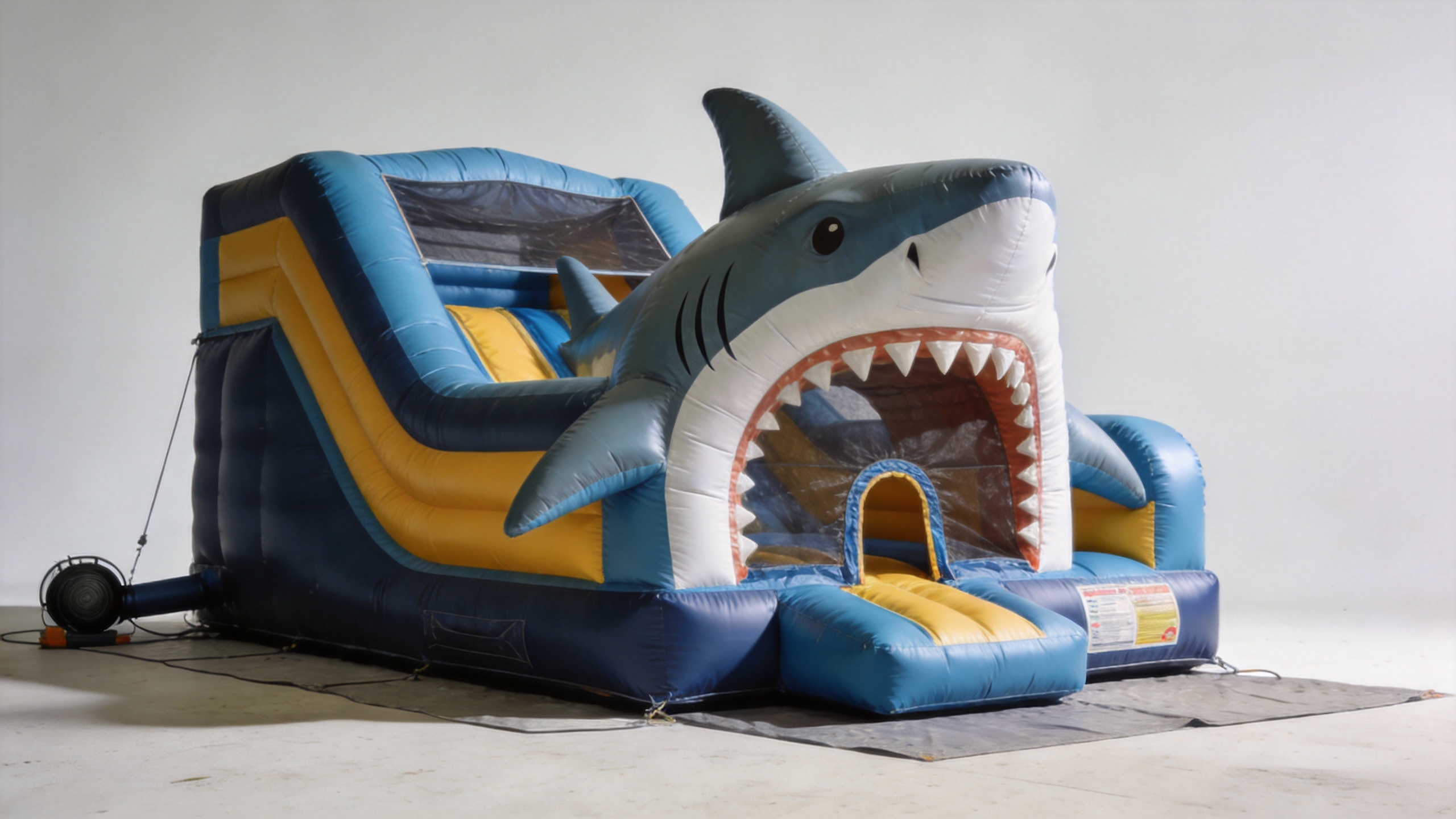
A themed combo can be a useful way to assess whether a supplier presents the information a commercial buyer needs. For example, review the available details for this Commercial Inflatable Shark Bounce House Combo 3D Shark Inflatable Bouncer with Air Blower for Sale, then compare its stated dimensions, included equipment, installation guidance, and intended use with your event plan. The product name alone should not determine the purchase decision; the supporting documentation and fit for your operating workflow should.
Choose for the Work You Will Actually Do
Ultimately, a commercial bouncy slide is selected for a repeatable service process. The right choice supports the work of the event team as well as the experience of the participants.
The clearest difference between a commercial bouncy slide and a home model is not the color, theme, or even the headline size. It is the expectation of repeated, organized use. Commercial buyers need to consider setup discipline, equipment compatibility, supervision, maintenance, transport, and local compliance alongside the play experience.
By evaluating the whole operating cycle, distributors, rental companies, and event planners can choose inflatables that are easier to deploy responsibly and easier to maintain between events.