EN
EN


What Is a Commercial Bounce House? A Rental Business Guide
A commercial bounce house is an inflatable play unit built for repeated paid use rather than an occasional backyard party. For a rental operator, the useful question is not simply “Is it fun?” It is whether the unit fits the venue, event mix, cleaning routine, transport plan, and local operating requirements. That is why conversations with commercial bounce house suppliers should start with operating conditions, not color or theme alone.
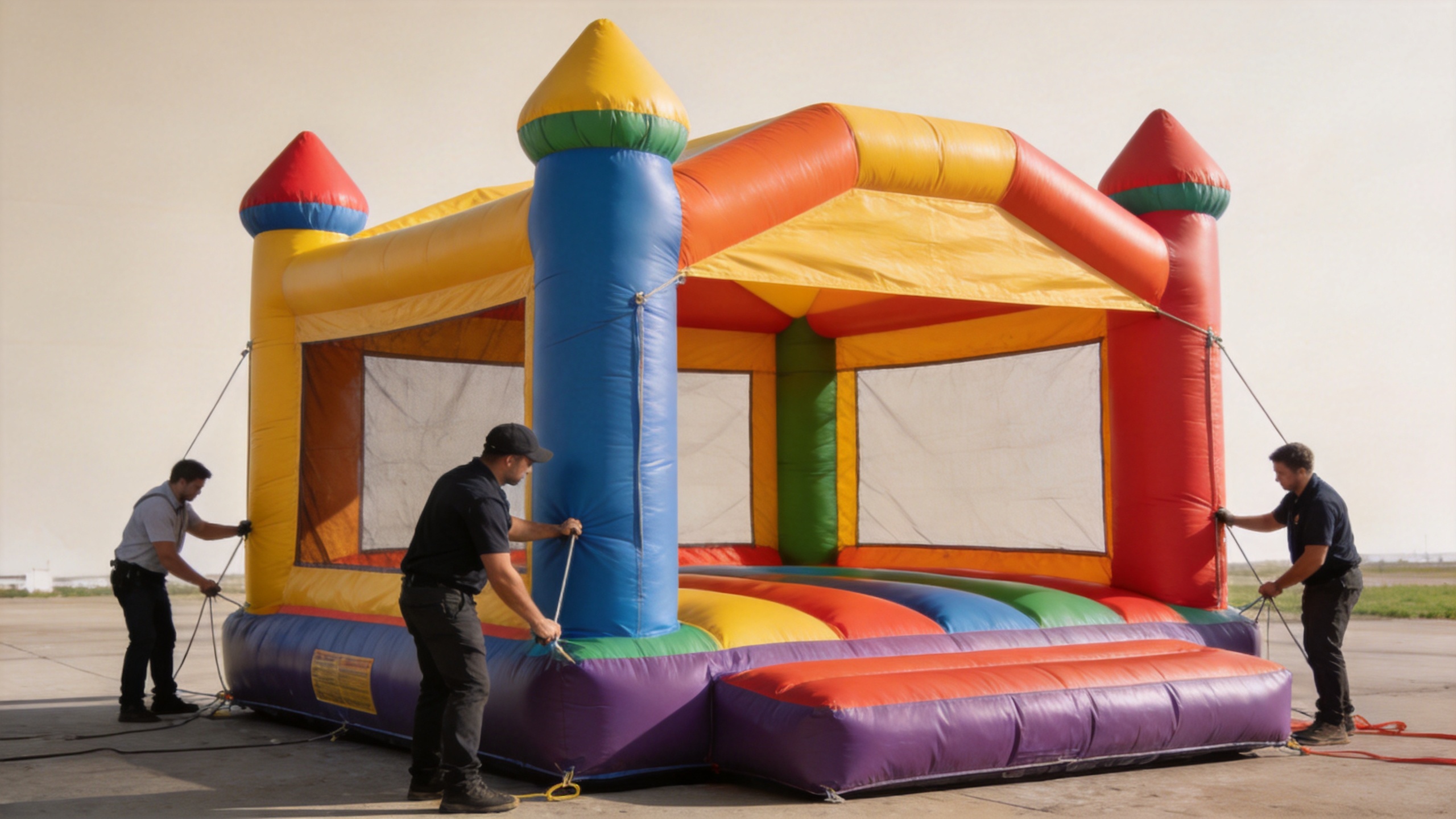
Commercial models are commonly used by party-rental companies, event planners, schools, camps, and distributors. They may be simple enclosed bouncers, bouncer-and-slide combinations, obstacle-style units, or themed inflatable bounce house designs. A suitable unit is the one a business can set up, supervise, clean, store, and rebook with confidence.
What makes a bounce house commercial?
“Commercial” describes the intended duty cycle and business context, not a universal guarantee of quality or compliance. A commercial bounce house is typically selected for frequent transport, repeated inflation and deflation, customer-facing use, and routine inspection. Buyers should ask commercial bounce house suppliers for the specific materials, seams, blower requirements, anchoring guidance, age or capacity guidance, repair information, and documentation available for the exact model.
It also helps to distinguish a product category from an operating outcome. An inflatable bounce house can look impressive in a catalog but still be a poor rental choice if the footprint conflicts with common venues or if the team cannot manage its setup and turnaround. In practice, commercial use means building a repeatable process around the unit.
How rental operators use commercial bounce houses
Rental businesses often use a commercial bounce house as a flexible core item: it can serve birthday parties, school events, community days, and family entertainment programs when the local conditions are suitable. Combo units add another activity, while themed units can support a specific event look. The right mix depends on the audiences a business serves and the space those audiences can provide.
From a rental operator’s perspective, turnover matters. A good buying discussion covers loading access, setup surface, storage space, cleaning between bookings, the time needed for inspections, and the accessories that must travel with the unit. Before comparing models, turn a vague request into a checklist: What venue sizes are most common? Who handles installation? How will staff document condition before and after each rental?
Core parts of a commercial buying checklist
When comparing commercial bounce house suppliers, use the same questions for every quote. This makes it easier to compare the total operating fit rather than a headline price.
- Use scenario: Identify the expected age groups, event types, indoor or outdoor locations, and seasonal demand.
- Footprint and access: Confirm the inflated dimensions, clearance needs, route from vehicle to setup area, and storage constraints.
- Setup conditions: Review the manufacturer’s instructions for blower use, anchoring, electrical access, weather limits, and supervision.
- Care routine: Ask how the material, seams, inflation points, and accessories should be inspected, cleaned, dried, repaired, and stored.
- Documentation: Request model-specific specifications, operation guidance, packing information, and the documents needed for your market.
Local rules and site conditions vary, so these points are a planning framework rather than a compliance promise. A responsible operator should verify applicable requirements with the relevant local authority, insurer, venue, and the manufacturer’s instructions.
Why safety and operations belong in the purchase decision
A rental unit earns revenue only when it can be deployed responsibly. That makes safe setup, active supervision, weather decisions, cleaning, and pre-use checks part of the purchasing decision. Commercial bounce house suppliers can provide product information, but the rental business remains responsible for confirming how each unit will be used in its own market and at each site.
For example, an inflatable bounce house should not be treated as ready for use merely because it is inflated. Operators need a documented check of the installation area, anchor method, power arrangement, blower condition, access routes, visible condition, weather, and responsible supervision. If any of those conditions are unclear, pause the setup and resolve the issue before use.
Choosing the right product mix for rental demand
Many operators build a range rather than relying on one unit type. A basic bouncer may suit smaller events; a bouncer-slide combo may support customers who want more activity in one booking; themed inflatables can help an event planner match a visual concept. Commercial bounce house suppliers can help organize options, but the final assortment should reflect your target market, vehicle capacity, storage, and staff workflow.
Dream Kiddie Toys serves buyers discussing commercial inflatables, bounce houses, slides, themed parks, water-play products, and advertising inflatables. For a product example, review the available details for the Commercial Grade Bouncer Slide Combo Inflatable Bounce House with Slide Jumping Bouncy Castle for Party Rental. Use the product page as a starting point for a model-specific conversation, not as a substitute for confirming the requirements of your own venue and market.
Questions to ask commercial bounce house suppliers
Before placing an order, send commercial bounce house suppliers a structured brief. Include your destination market, intended event types, preferred product style, expected user group, site surfaces, storage and transport limits, and the documentation you need to review. Ask which details are confirmed for the specific model and which items must be checked locally.
- What are the model-specific dimensions, packing details, and included accessories?
- Which setup, anchoring, inspection, cleaning, and storage instructions accompany the unit?
- What information can support a review of local or venue requirements?
- What replacement parts, repair guidance, and after-sales communication are available?
- How does this inflatable bounce house fit the event mix and operational workflow described in our brief?
Start with an operating plan, then select the unit
A commercial bounce house is a business asset only when its selection supports safe, repeatable operations. Start with the events you intend to serve, map the practical conditions around setup and turnaround, then compare commercial bounce house suppliers using a consistent document and operations checklist. This approach helps a rental business make clearer product decisions while keeping local verification and day-to-day responsibilities in view.