EN
EN


Wet vs Dry Inflatable Slides: When Each Setup Makes Sense
For rental operators, event planners, and distributors, choosing how to position a wet dry inflatable slide is less about declaring one mode “better” and more about matching the setup to the event. The same product category can support a sunny summer program, a school carnival, a community day, or a cooler-season indoor event—but the site conditions, staffing plan, turnover routine, and guest expectations change with the mode.
This guide explains where wet and dry setups make practical sense. It is written as a planning framework, not a substitute for the product manual, local rules, or an operator’s site-specific safety assessment.
Start with the Event, Not the Label
A wet dry inflatable slide may be designed to operate with or without water, but the available configuration is only the starting point. A rental business or event team should first define the event environment: expected weather, surface and drainage conditions, water availability, participant ages, supervision, access to power, and the time available for cleaning and reset.
That approach helps prevent a common procurement mistake: assuming that every wet-capable slide should be used wet at every summer event, or that dry operation requires no planning. Both modes need a clear operating plan. Manufacturer instructions remain the authority for the specific model, including any limits on water use, anchoring, blower placement, rider capacity, and cleaning.
When Wet Use Makes the Most Sense
Wet use is usually a strong fit for warm-weather events where cooling value is part of the guest experience. Think outdoor summer festivals, poolside activity areas, hot-climate birthday programs, holiday camps, and rental packages built around water play. In these settings, a wet dry inflatable slide can become a focal point because it combines movement, visible activity, and a water-based attraction in one footprint.
Before choosing wet mode, confirm that the site can support it. The team needs an approved water source, a planned hose route that does not create a trip hazard, a suitable surface, and a realistic drainage plan. Event organizers should also plan for attendants, entry and exit control, and cleanup between operating periods. General rental safety guidance often emphasizes active water supervision and suitable electrical arrangements; those points should be incorporated into the event’s own procedures rather than treated as universal product specifications.
Wet-mode planning questions
- Is the event outdoors, warm enough, and scheduled long enough to justify water setup and drying afterward?
- Can the venue provide water access and manage runoff without affecting walkways, neighboring activities, or site rules?
- Are trained attendants available to supervise riders and maintain orderly entry and exit?
- Does the product manual confirm that the selected slide and accessories are approved for wet operation?
Where Dry Use Has the Advantage
Dry use often fits events where water would add unnecessary complexity: school fairs, indoor family centers, church or community gatherings, shopping-center promotions, cooler-weather rentals, and multi-activity events with a tight turnover schedule. A dry inflatable slide can preserve the visual appeal and active play element while avoiding water supply, drainage, wet-surface management, and the extra drying work that follows wet use.
Dry mode can also make commercial scheduling more flexible. A rental operator may be able to use a dry setup for morning or shoulder-season events, then reserve water-focused inventory and crews for high-temperature programs. That is not a claim about universal capacity or earnings; it is a practical way to separate event requirements and prepare the right operating resources.
Dry operation still requires a clean, clear site, correct anchoring or securing as specified, power planning, appropriate rider rules, and active supervision. “Dry operation still requires active operational controls.”
A Quick Comparison for Commercial Planning
| Planning factor | Wet setup | Dry setup |
|---|---|---|
| Typical event environment | Warm outdoor programs where water play is desired | Indoor, cooler-weather, or water-restricted events |
| Site preparation | Water access, hose routing, drainage, and wet-area management | Clear space, approved power, and the model’s normal setup requirements |
| Operations focus | Water supervision, controlled flow, and post-use drying | Rider flow, surface checks, and standard cleaning between events |
| Scheduling consideration | Weather-sensitive and often more dependent on outdoor conditions | Useful where flexibility and lower water logistics matter |
Plan for Seasonal Transitions and Turnaround
The commercial value of a wet dry inflatable slide often comes from its potential to fit different programs across the calendar. To use that flexibility well, build a transition checklist rather than changing modes informally. After wet operation, follow the manufacturer’s cleaning, draining, and drying instructions before storage or dry deployment. Inspect the slide, entry area, seams, anchors, blower connection, and accessories before the next event. Keep wet-use equipment—such as approved hoses or water-control accessories—organized separately from the standard dry-use setup kit.
For procurement teams, ask suppliers how the model is intended to be set up and maintained in each approved mode. For rental operators, record what each venue requires before arrival. A simple job sheet covering site access, power, weather backup, water approval, staffing, and collection timing will make the choice between wet and dry use more consistent.
Use a Confirmed Product Page as a Starting Point
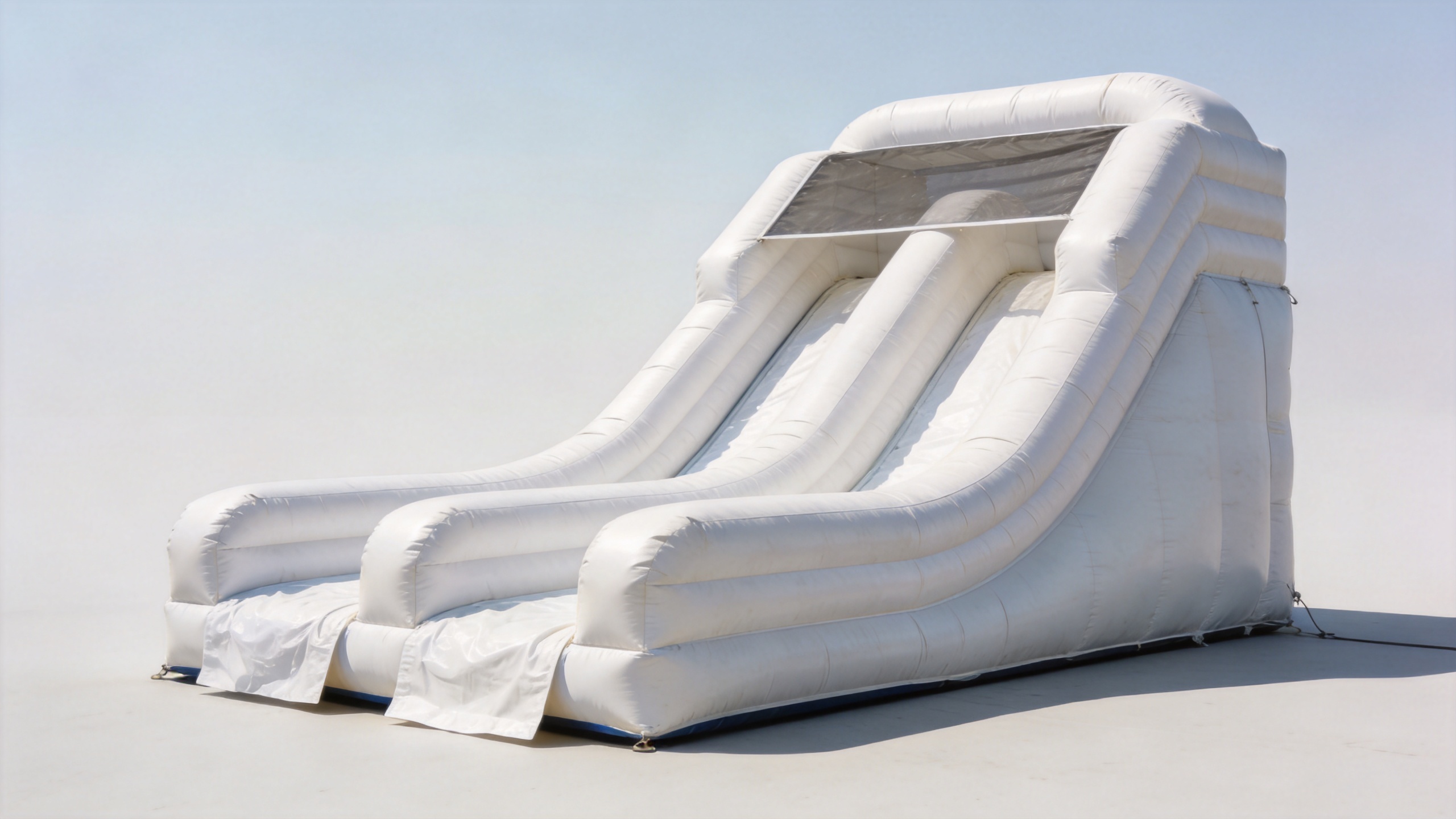
If a dual-lane slide with a pool-style layout fits your planned events, review the confirmed listing for the White Inflatable Water Slide Dual Lane Inflatable Waterslide with Pool Wet Dry Inflatable Slide with Blower. Treat the listing as a product-reference starting point, then verify the final configuration, operating instructions, and venue requirements before making commitments.
Choose the Mode That Reduces Event Friction
Choose wet use when the climate, venue, water plan, and supervision model support a water-play experience. Choose dry use when flexibility, indoor compatibility, seasonality, or simpler logistics matter more. For both modes, success comes from matching the wet dry inflatable slide to the actual event plan—not from assuming that one configuration works everywhere.
For distributors and rental teams, that message is also useful in sales conversations: start by asking how, where, and when the customer will operate the slide. The clearer those answers are, the easier it is to recommend a suitable setup and prepare responsibly.