EN
EN

Water Bounce House vs Traditional Bounce House for Summer Events
For a rental operator, distributor, or event planner, choosing a water bounce house is not simply a question of adding a slide. It changes the way an event site is prepared, staffed, cleaned, and scheduled. A traditional dry bounce house still has an important role: it can work across more seasons, fit venues without water access, and keep a simpler operating routine. The right choice depends on the event calendar, the site, the age mix, and how much experience you want guests to have.
This comparison focuses on commercial purchasing decisions. It is designed for buyers who need equipment that can serve summer parties, community events, rental fleets, and distributor customers—not just a one-time backyard purchase.
What makes a water bounce house different?
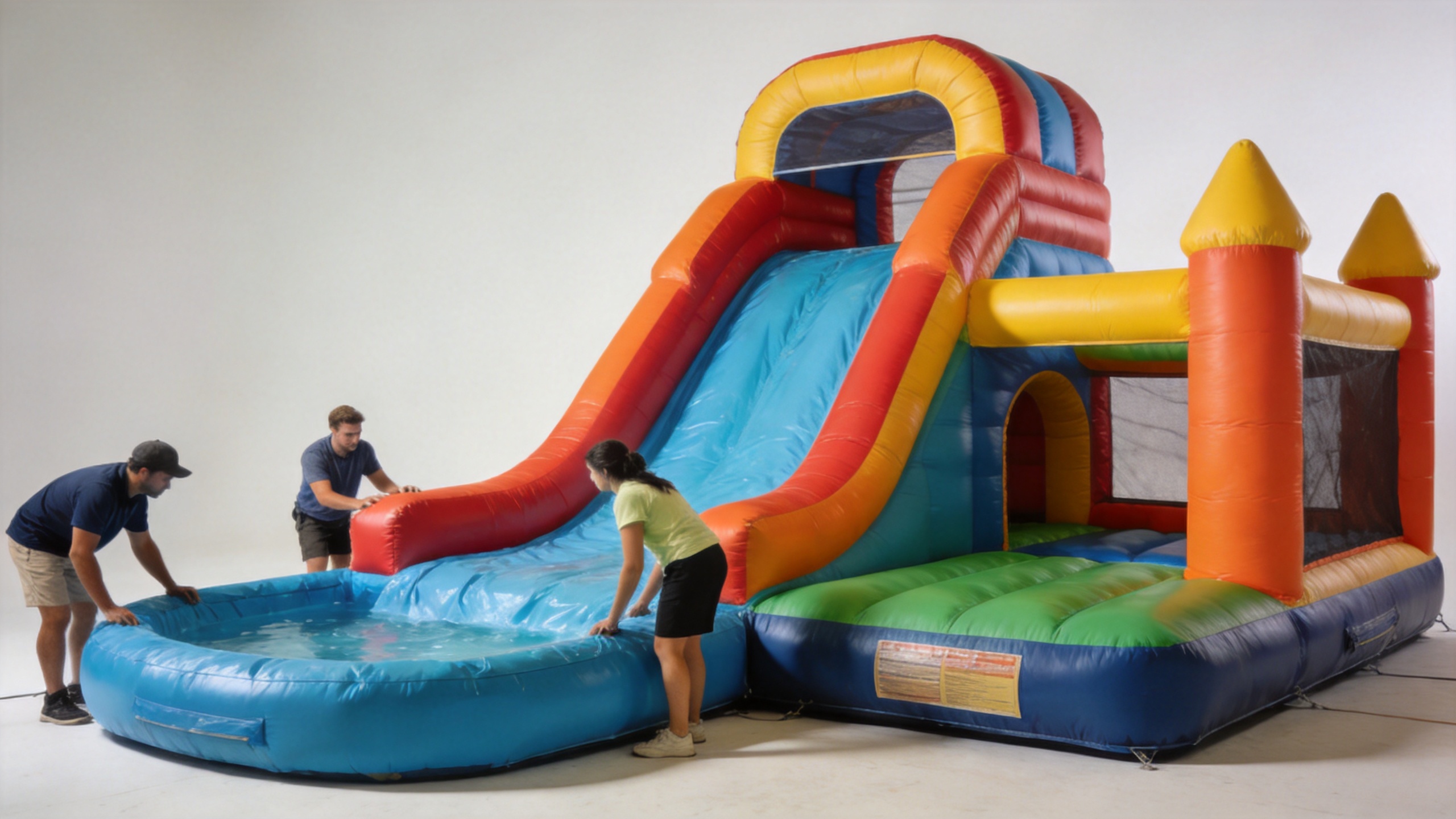
A water bounce house combines the familiar jumping area with wet-play features such as a slide, splash landing area, water cannon, or pool. An inflatable bounce house with water slide can turn a standard activity into a cooling destination on a hot day. That difference matters most when temperatures are high and attendees are likely to spend long periods outdoors.
Traditional bounce houses focus on dry jumping, climbing, and sometimes a dry slide. Their operating model is more straightforward because there is no hose connection, drainage plan, or wet-surface reset. They are often the practical option for indoor venues, school halls, shaded events, and dates outside the main warm-weather window.
Side-by-side comparison for commercial summer events
| Decision factor | Water bounce house | Traditional bounce house |
|---|---|---|
| Guest experience | Combines bouncing with cooling and slide play; suited to hot-weather demand. | Classic active play with a dry, easy-to-understand format. |
| Site needs | Needs a reliable water source, drainage awareness, and a suitable wet-play surface. | Needs a clear, level installation area and standard power access. |
| Seasonal flexibility | Strongest during warm outdoor months. | Useful across more weather conditions and indoor programs. |
| Operations | Requires wet-use supervision, cleanup planning, and a drying routine. | Usually allows simpler turnover between bookings. |
| Fleet role | Can create a premium summer package or destination attraction. | Works as a dependable core unit for varied event types. |
The table is a starting point, not a substitute for the product instructions or local event requirements. Capacity, anchoring, wind limits, electrical setup, and permitted water use should follow the manufacturer documentation and the rules at the installation site.
When a water bounce house is the better choice
A water bounce house usually earns its place when the event is outdoors, the weather is genuinely hot, and the organizer wants one attraction to hold attention for longer. Water play can make a unit feel more distinctive in a summer rental lineup, especially when a standard dry bouncer is already common in the local market.
It is especially relevant for park events, summer camps, backyard celebrations with suitable drainage, and community programs where cooling is part of the guest expectation. A commercial buyer can also use it to build higher-value packages around a slide, pool, or themed centerpiece. For example, a commercial blue inflatable waterslide with swimming pool provides a relevant category example when a water-focused attraction is needed.
However, wet play must be planned as an operating system, not an add-on. Confirm the hose route, electrical separation, drainage direction, accessible exits, and where guests will queue. Keep entrances and exits clear, clear the installation area of sharp objects and loose debris, and assign trained supervision appropriate to the event and the unit instructions.
When a traditional bounce house is the smarter purchase
A traditional bounce house is often the better commercial choice when flexibility matters more than summer-only excitement. It can be booked for indoor venues, cooler-day events, school functions, and programs where a water connection would complicate setup. For a new rental fleet, it may also create a reliable base inventory that can operate through a broader part of the year.
Dry equipment can reduce turnaround friction between events. There is less concern about wet footwear, splash zones, runoff, and post-event drying. That does not make it maintenance-free: buyers still need a clean, level site, proper anchoring, secure blower connections, routine inspections, and active supervision. The advantage is that the workflow is familiar to more venues and easier to explain during booking.
For themed dry-play demand, a commercial inflatable shark bounce house combo illustrates how visual design can add appeal without requiring a full water-play setup.
Use the event site to make the final decision
A sound product decision begins with the event site, not the catalog. Ask whether the area has room for the inflated footprint plus safe circulation, whether the ground can support the approved anchoring method, and whether power and water access are reliable. For a water bounce house, also ask where water will go after use and whether the venue permits wet attractions.
- Choose a water bounce house when outdoor heat, water access, drainage, and staffing support a premium wet-play experience.
- Choose a traditional bounce house when venue flexibility, indoor use, shoulder-season bookings, or faster dry turnover matter most.
- Choose a mixed fleet when you serve summer events and year-round rental demand; it gives customers a clear choice by season and site.
A practical buying checklist for distributors and rental operators
- Map your warm-weather demand by event type, location, and booking month.
- Confirm the usual site conditions: water, power, access paths, surface, drainage, and storage.
- Compare the labor needed for setup, supervision, cleanup, drying, and next-day readiness.
- Review the unit’s instructions, anchoring requirements, age guidance, and inspection process before committing.
- Build a product mix that matches your customers: a dry core for flexible bookings and selected wet units for peak summer demand.
Conclusion: match the attraction to the operating plan
A water bounce house can be a compelling summer-event investment when its cooling value, slide play, and visual impact match a site that is ready for wet operation. A traditional bounce house remains the more adaptable choice for varied venues and a longer booking season. Rather than treating one as universally better, commercial buyers should compare the guest experience with the practical realities of water, weather, staff, cleanup, and fleet utilization.
For distributors, rental companies, and activity planners, a balanced catalog can make the decision easier: offer dry inflatables for broad use and water-ready combinations for the summer dates where guests expect a more immersive experience.