EN
EN


How Inflatable Water Slides Work: Blowers, Anchoring, and Water Flow
An inflatable water slide looks simple once it is standing, but a safe operating setup is a coordinated system rather than a single piece of equipment. For rental operators, event planners, and distributors, the useful question is not only how fast the slide inflates. It is how continuous air, secure anchoring, controlled water, and daily checks work together before participants arrive.
From a distribution and purchasing perspective, it helps to separate the product from the operating conditions. The slide fabric forms the layout, but the blower maintains its shape, the anchors resist movement, and the water arrangement creates the sliding surface. If one part of that system is not prepared, the inflatable water slide should not be treated as ready for use.
The basic structure of an inflatable water slide
A commercial inflatable water slide is typically an air-supported structure with slide lanes, side walls, a climbing section, splash or pool area, air tubes, anchor points, and water connection points. The seams and chambers distribute air through the structure, while the higher side walls and inflated steps help define where users climb and slide.
Air-supported does not mean airtight. Normal operation relies on a constant supply of air, and small amounts of air can leave through seams or intended openings. That is why the slide stays connected to its blower during operation. Before choosing a unit for an event, confirm the intended age group, footprint, access path, power availability, surface condition, and water/drainage plan. A common mistake is to focus only on the visible height or color while leaving these operating checks until arrival day.
Why the blower must run continuously
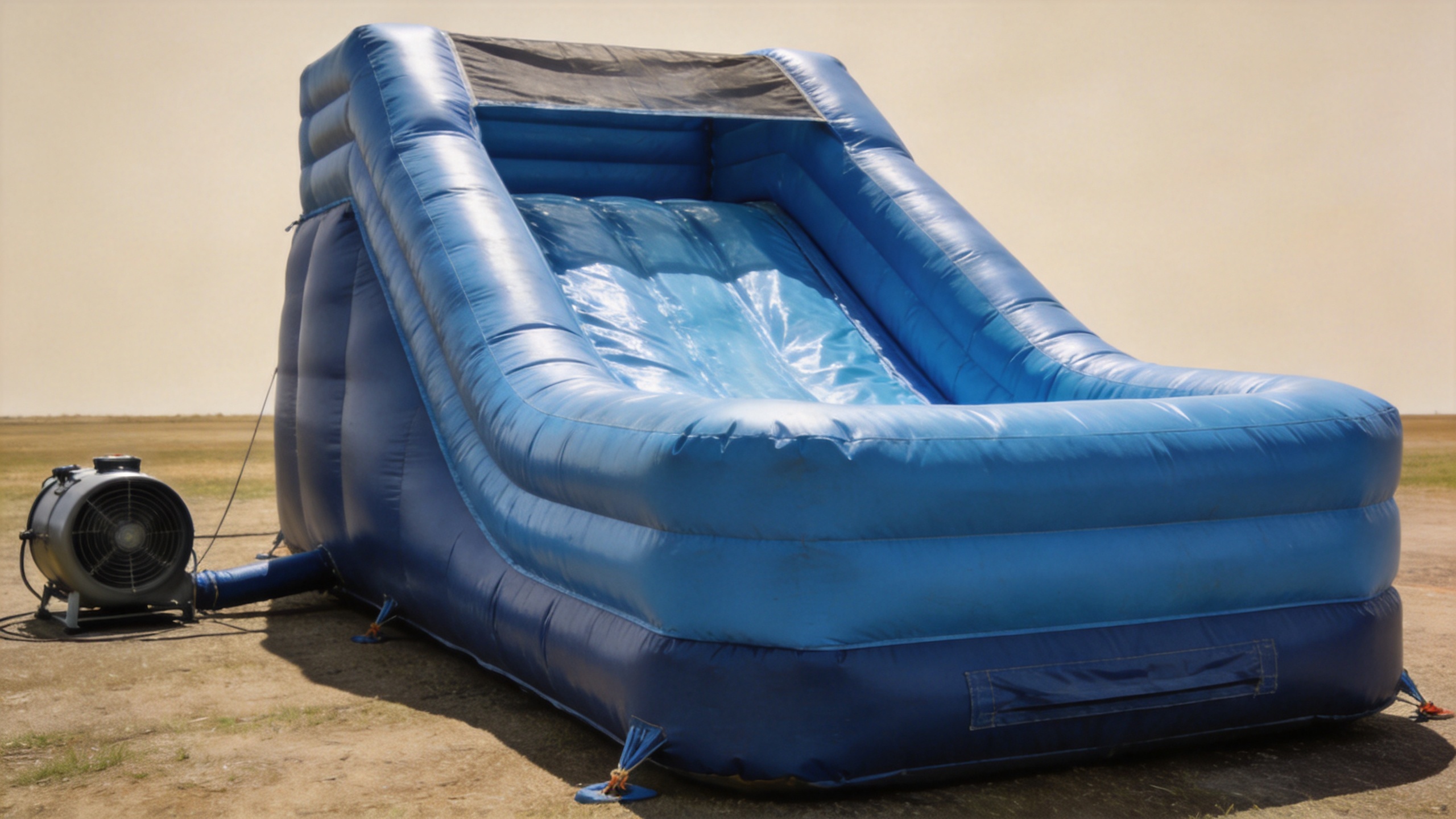
The blower is the working heart of an inflatable water slide. After the slide is unrolled and its air tube is properly attached, the blower pushes air into the chambers and keeps the walls, climbing lane, and slide profile firm. Turning the blower off removes the support that gives the structure its usable shape, so it is not a device that should be disconnected while people are on or near the unit.
When you blow up water slide with blower equipment, treat the electrical setup as part of the site plan. Put the blower where its intake is clear and dry, protect cables from traffic and water, and follow the unit instructions for the required power source and protective device. Setup guidance commonly calls for closing drainage plugs before inflation and using a GFCI-protected outlet where applicable. The exact electrical requirements must come from the supplied blower and local rules, not from a generic online checklist.
A practical air-system check
- Inspect the blower, cable, plug, and air tube before use.
- Secure the air tube connection so it does not loosen during operation.
- Check that the blower intake is not blocked by fabric, debris, or splash water.
- Let the slide reach its intended firmness before admitting users.
- Stop operation if the structure loses firmness or the blower cannot run reliably.
For a rental business, a consistent pre-opening check is more useful than assuming every inflatable water slide behaves the same way. Different sizes, layouts, and manufacturer instructions can require different blower arrangements.
Anchoring keeps the slide where it belongs
Anchoring does not make the slide optional to supervise; it is a basic control against shifting, lifting, or moving while the inflatable water slide is in use. Anchor points are built into the structure so the unit can be secured with the manufacturer-approved method for the surface. Depending on the setup location and instructions, that may involve suitable stakes or approved weighted anchors.
The important principle is to use every required anchor point and follow the product documentation. Grass, hard ground, pavement, artificial turf, and indoor flooring do not present the same anchoring conditions. An operator should confirm the ground condition before delivery rather than improvising after the slide has been inflated. Wind and weather forecasts also belong in the event decision process; if conditions exceed the limits in the manufacturer guidance or local requirements, suspend setup or operation.
Think of anchoring as a verification task, not a sales feature. Ask: is the surface appropriate, are all specified points secured, is there enough clearance around the structure, and does the weather permit operation? This shift—from choosing a slide by appearance to checking the installation conditions—helps operators make better commercial decisions.
How water creates the sliding surface
Water does not inflate the unit. Instead, it is supplied after the air structure is stable so that it can travel over the slide surface and reduce friction for the rider. A hose is generally connected to the designated water inlet or spray system specified for that inflatable water slide. The objective is an even, controlled flow—not maximum pressure.
Before water is introduced, review the site for drainage, hose routing, standing-water risks, and separation from electrical equipment. Keep the blower and its intake outside the splash area, and route hoses so they do not create a trip hazard. Use the product instructions to set the water flow because designs differ: some have overhead sprayers, while others feed water across a lane or into a splash area. If water is pooling where it should not, stop and correct the setup instead of adding more flow.
Water-flow checks for event teams
- Confirm drainage plugs and splash-area drainage are set according to the instructions.
- Connect the hose only after the inflated structure is stable and anchored.
- Start with a controlled flow and check coverage across the slide lane.
- Keep electrical connections and the blower clear of water exposure.
- Monitor the landing or pool area and pause use if drainage is inadequate.
Putting the system together before opening
For awareness-stage planning, a practical setup sequence is: inspect the site, position and unfold the slide, secure the anchors, connect and test the blower, allow the unit to reach operating firmness, then connect and adjust water. Add participant rules and active supervision before opening the inflatable water slide.
Dream Kiddie Toys works with distributors, rental operators, event planners, and wholesale buyers on inflatable amusement equipment. If you are evaluating a product for a commercial program, review the available Commercial Blue Inflatable Waterslide with Swimming Pool Giant Inflatable Water Slide for Kids Adults alongside its supplied instructions, site requirements, and local operating rules.
Final checklist: air, anchors, water, and supervision
An inflatable water slide works because each operating element supports the next. The blower provides continuous air; the anchors stabilize the structure; the water system prepares the slide surface; and an operator checks the site and supervises use. Do not substitute a general article for the manufacturer manual, labeling, local electrical requirements, weather limits, or a site-specific safety assessment.
Before every event, confirm the same essentials: the blower is suitable and running, anchor points are secured as instructed, water is flowing where designed, drainage is working, and the site remains appropriate for operation. That routine gives rental teams and event planners a clearer way to prepare an inflatable water slide for safe, organized use.